
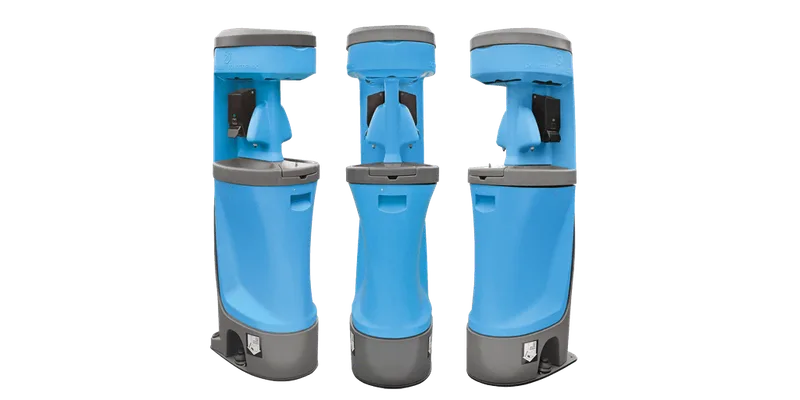
Understand the proposed station's water arrangement
A self-contained station may store clean water and collect used water within the equipment. Other models may depend on connections. Ask which arrangement is proposed and what needs to be ready at the property; do not assume a unit can connect to any nearby tap or operate without one.
The wash station is separate from the toilet's waste-holding tank. It also serves a different purpose from a sanitizer dispenser. Where a water-and-soap wash point is required for the activity, an available sanitizer pump does not answer the same need. Confirm the equipment and use with the responsible event or site contact.
Put it where washing can happen naturally
Consider the route people take after using the toilets and before returning to the work or gathering. A visible position can help, but it must not block a toilet door, an accessible approach or a busy food line. Allow space to stand and leave the station without stepping into moving vehicles.
Check the actual controls, reach and surrounding surface for the people using it. The station may be close to an accessible toilet yet unsuitable to approach or operate. Review the two together and reassess the space once chairs, barriers or site materials are in place.
Name the water and supply responsibilities
Confirm the accepted clean-water source or replenishment arrangement and identify who supplies soap and drying materials. A standard handwashing description does not establish that the water or sink is suitable for drinking, food preparation or another specialized purpose. Describe those needs separately rather than repurposing the station.
Explain expected users and busy periods so replenishment can be planned around actual demand. A short event can exhaust supplies, while a quiet site may have different needs. No universal refill interval follows from the length of hire alone.
Treat used water and cleaning as part of operation
Agree how collected used water will be removed and how the equipment will be cleaned. Do not drain it into a garden, gutter or other unapproved place, or add improvised treatment chemicals. Follow the provider's operating instructions and the agreed responsibilities.
Assign someone to report low water, missing consumables, leakage or a control that is not working. Keep that person's role distinct from servicing: noticing a problem does not mean opening components or repairing rented equipment. If use increases, review care before the original arrangement leaves the station unusable.
Include the whole station arrangement in the quote
Ask the proposal to identify the model, water setup, consumables, cleaning and replenishment, rental period, delivery and collection. Show the provider the permitted handling route and intended position, including any restrictions when the event or worksite is occupied.
Maintain access until removal and identify the contact who can coordinate the final visit. If the station must move or the rental continues longer, agree the change rather than disconnecting, emptying or relocating it independently.
Questions before you book
Does every station need a tap connection?
No single arrangement applies to every model. Confirm whether the proposed unit uses stored water or connections and what the property must provide.
Can the station be used as a drinking-water or food-preparation sink?
Do not infer that from a handwashing label. Identify that separate requirement and confirm suitable equipment and water arrangements with the responsible parties.
What if the used-water tank is full?
Report it through the agreed service contact and follow operating instructions. Do not improvise a discharge onto the ground or into nearby drains.